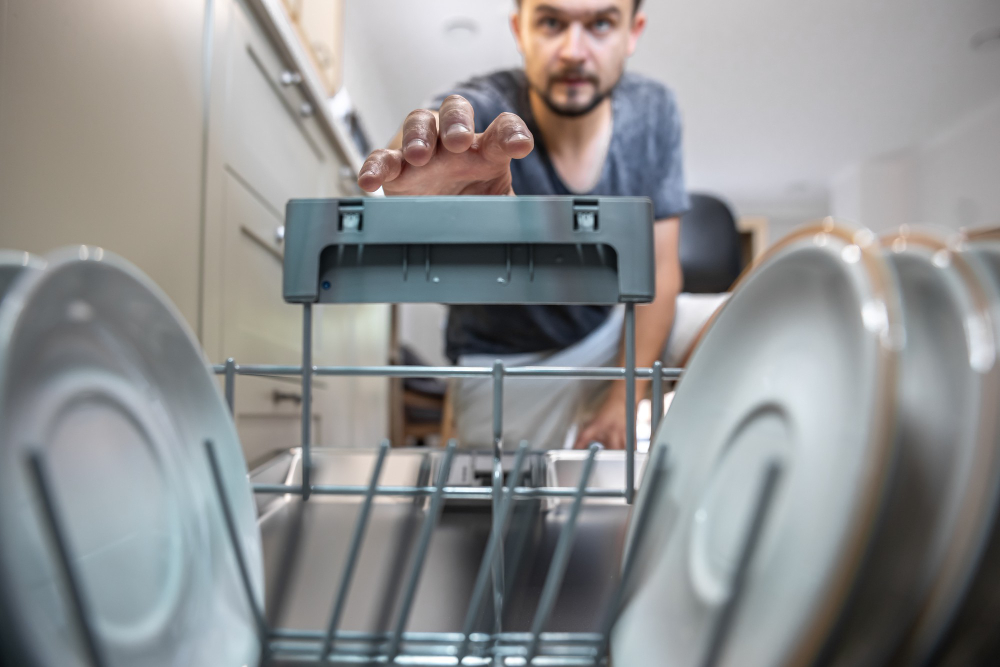
There is a distinct moment of modern panic when the dinner party is over, the sink is piled high with greasy plates, and the dishwasher suddenly refuses to start. Instead of the reassuring hum of rushing water, there is only a low buzz, a flashing error code, or worse—complete silence.
For many homeowners and renters, the immediate reaction is to call an expensive appliance repair technician. However, a significant percentage of common dishwasher problems do not require a professional license to fix. Most issues stem from minor blockages, simple component wear, or incorrect settings that can be resolved with a systematic approach.
This comprehensive guide breaks down the mechanics of dishwasher troubleshooting into logical, easy-to-follow steps designed specifically for beginners. By understanding how these machines operate and where they typically fail, anyone can safely diagnose and repair their appliance, saving both time and money.
Related Posts
- How to Fix Common Product Issues at Home: A Practical Repair Guide
- The Ultimate Step by Step Repair Guide for Common Appliance Problems
- How to Fix a Washing Machine That Will Not Drain: A Complete Troubleshooting Guide
- Dishwasher Specifications Explained: Water Consumption and Place Settings
- Electric Oven Installation Requirements and Safety Checklist: A Complete Guide
Understanding the Anatomy of a Modern Dishwasher
Before attempting to fix an appliance, it helps to understand exactly how it works. A dishwasher is essentially a water-tight box that heats water, sprays it against dishes, pumps it out, and dries the contents. Unlike a washing machine, it does not submerge the items inside; instead, it relies on precisely directed water pressure and specialized detergents to chemically break down food particles.
To troubleshoot effectively, familiarize yourself with these critical components:
- The Float Assembly: A small plastic cylinder located on the floor of the tub. It acts as a mechanical safety switch, rising with the water level to cut off the water supply when the tub is full.
- The Spray Arms: Hollow plastic or metal bars that spin during the cycle. They feature small nozzles that distribute pressurized water throughout the machine.
- The Filtration System: Located at the very bottom of the tub, this assembly traps food debris to prevent it from recirculating onto clean dishes or clogging the drain pump.
- The Door Latch and Switch: A mechanical hook and electrical switch that ensures the door is completely sealed before allowing the control board to initiate a cycle.
- The Inlet Valve: An electronically controlled valve connected to the household water supply that opens to allow fresh water into the tub.
Safety First: Pre-Troubleshooting Protocol
Working on any major household appliance requires strict adherence to safety protocols. Dishwashers combine two elements that never mix safely without precaution: electricity and water. Before touching any internal components, checking a valve, or removing a panel, complete these safety steps.
1. Disconnect the Power
Never attempt to diagnose internal components while the machine is live. If the dishwasher plugs into an outlet under the sink, unplug it directly. If it is hardwired into the home’s electrical system, locate the main electrical panel and switch off the specific circuit breaker dedicated to the dishwasher. Verify the power is off by pressing buttons on the control panel to see if they light up.
2. Shut Off the Water Supply
Locate the water shut-off valve, which is typically found underneath the kitchen sink. Turn it clockwise until it stops. This prevents accidental flooding if a water line needs to be disconnected during the troubleshooting process.
3. Gather Basic Tools
Most introductory fixes require only a few standard household tools. Prepare a flashlight, a flathead screwdriver, a Phillips-head screwdriver, a pair of adjustable pliers, a wire brush, and a shallow bucket or old towels to catch residual water.
Step 1: The Dishwasher Won’t Turn On or Start
When an appliance appears completely dead, the issue is almost always related to power delivery or safety interlocks rather than a catastrophic mechanical failure.
Check the Electrical Connections
Begin with the simplest explanation. Ensure that the unit is fully plugged in if it utilizes a standard outlet. If the outlet is a Ground Fault Circuit Interrupter (GFCI), check to see if the reset button has tripped. Kitchen environments experience high humidity, which can occasionally trigger these sensitive safety devices. Next, check the home circuit breaker panel to ensure the switch hasn’t flipped to the middle “tripped” position.
Inspect the Door Latch Assembly
A dishwasher will not run if it believes the door is open. Over time, closing the door forcefully can misalign the mechanical latch, or the underlying microswitch can fail. Inspect the latch hook on the top of the door frame to ensure it isn’t bent or broken. If the latch is physically intact but the machine won’t start, the door switch itself may lack electrical continuity, requiring replacement.
Look for Thermal Fuse Issues
Many modern dishwashers contain a thermal fuse located inside the main control panel door. This fuse is designed to blow if the control board overheats, protecting the appliance from catching fire. If a dishwasher suddenly loses power mid-cycle and refuses to turn back on, a blown thermal fuse is a highly probable cause. Testing this requires a multimeter to check for electrical continuity.
Step 2: Water Won’t Fill the Tub
If the control panel lights up and the timer starts counting down, but no water enters the appliance, the machine cannot perform its primary function.
Examine the Water Inlet Valve
The water inlet valve is the gateway between household plumbing and the appliance. It is typically accessed by removing the lower kickplate panel at the base of the machine. Over time, hard water deposits, rust, and sediment from municipal water lines can clog the small mesh screen inside the valve. If the screen is clear but the valve fails to open when the machine calls for water, the internal solenoid may have failed.
Inspect the Float Switch
The float assembly acts as the machine’s flood protection mechanism. If the plastic float becomes stuck in the raised position due to trapped silverware, a build-up of dried detergent, or physical misalignment, the machine will falsely register that the tub is already full of water. Gently tap the float to ensure it moves up and down freely. You should hear a distinct clicking sound from the microswitch underneath when the float drops to its lowest point.
Step 3: Dishes Come Out Dirty or Covered in Film
Pulling a load of dishes out only to find baked-on food or a chalky white film is one of the most frustrating appliance issues. Fortunately, this is frequently a maintenance problem rather than a broken component.
Clean the Cylindrical Filter Assembly
Modern dishwashers are incredibly quiet because they no longer use loud, heavy food-macerating disposals at the base. Instead, they rely on high-efficiency mesh filtration systems. If these filters are not cleaned regularly, they become choked with grease, seeds, and food particles. This restricts water flow and recirculates dirty debris back onto the dishes.
To clean it, twist the cylindrical filter counterclockwise, lift it out, and rinse it under hot running water. Use an old toothbrush to gently scrub away stubborn residue before locking it back into place.
+-----------------------------------------------------------------+
|                      FILTRATION CLEANING TIP                    |
| Never use abrasive metal sponges or harsh chemical bleach to    |
| clean the delicate plastic mesh of a dishwasher filter. Hot     |
| water and standard dish soap are sufficient to dissolve grease. |
+-----------------------------------------------------------------+
Unclog the Spray Arm Nozzles
Water must spray with significant velocity to clean dishes effectively. If mineral scale from hard water or tiny food remnants lodge themselves inside the tiny holes of the spinning spray arms, water pressure drops dramatically. Remove the spray arms (usually held in place by a simple hand-tightened nut or a snap-fit mechanism) and use a straightened paperclip or toothpick to clear each individual nozzle. Flush the arm with water to ensure any loose debris inside is completely washed away.
Address Hard Water and Detergent Film
If dishes consistently emerge with a cloudy, white film, the issue is likely chemical rather than mechanical. Hard water contains high concentrations of calcium and magnesium, which react poorly with modern eco-friendly, phosphate-free dish detergents. Utilizing a dedicated rinse aid helps water sheets slide off glass surfaces smoothly before minerals can dry into spots. Alternatively, adding a specialized citric acid dishwasher cleaner once a month will dissolve internal scale accumulation.
Step 4: The Dishwasher Won’t Drain
Standing water at the bottom of the tub at the end of a cycle indicates a drainage failure. A small pool of clean water around the sump filter is completely normal to keep seals moist, but water covering the bottom floor requires immediate intervention.
Clear the Garbage Disposal and Air Gap
Most kitchen dishwashers drain directly into the household garbage disposal under the sink. If the disposal is full of unground food scraps, the dishwasher water cannot exit. Run the garbage disposal thoroughly with cold water running to clear the pathway.
If the dishwasher was recently installed and has never drained, verify that the installer removed the solid plastic knockout plug from the disposal’s inlet nipple. Additionally, check the chrome air gap cylinder located next to the kitchen faucet; if it is blocked with debris, water will backup or spill onto the counter.
Inspect the Drain Hose for Kinks
The flexible drain hose running from the back of the dishwasher to the under-sink plumbing can easily become kinked or crushed by heavy cleaning supplies stored beneath the sink. Inspect the entire length of the hose for sharp bends, cracks, or sagging sections that could restrict water flow.
Check the Drain Valve and Pump
If the plumbing lines are clear, the issue may lie within the appliance’s drain pump itself. Debris like broken glass, toothpicks, or bone fragments can bypass the filter and jam the pump’s impeller blades. Accessing the pump usually involves working from underneath the unit. Once exposed, removing the pump cover allows you to check for physical obstructions that are physically seizing the motor.
Step 5: Dealing with Leaks
Water pooling on the kitchen floor is a critical issue that can rapidly cause structural damage to cabinetry and subflooring if ignored. Locating the exact source of the leak is key to a successful repair.
Check the Door Gasket
If water drips directly from the bottom or sides of the dishwasher door during a cycle, the rubber door seal (gasket) is the prime suspect. Over time, the rubber can dry out, crack, or become misaligned. Clean the gasket thoroughly with warm soapy water to remove food buildup that might prevent a tight seal. If the rubber feels brittle or shows visible tears, pull it out of its retention channel and press a replacement gasket into place.
Inspect Hose Clamps and Fittings
Leaks that occur underneath the machine—often hidden from immediate view until water seeps out from the kickplate—are typically caused by loose hose connections or cracked plastic fittings. With the power disconnected and the kickplate removed, look for signs of active dripping or white crusty mineral paths near the water inlet valve and the drain pump connections. Tightening a loose hose clamp or replacing a cracked rubber coupling is an inexpensive and permanent fix.
Primary Troubleshooting Indicators
To help simplify the diagnostic process, use this quick-reference matrix to align symptoms with their most likely root causes and required actions.
| Symptom | Most Likely Cause | Difficulty Level | Primary Action Required |
|---|---|---|---|
| Completely Dead Unit | Tripped circuit breaker or broken door switch | Easy | Reset breaker; inspect door latch alignment |
| Water Fails to Enter Tub | Clogged water inlet valve or stuck float switch | Medium | Clean inlet valve screen; free up float |
| Cloudy/Dirty Dishes | Blocked spray arm nozzles or saturated filter | Easy | Clear nozzles with wire; clean mesh filter |
| Standing Water in Tub | Blocked garbage disposal plug or clogged drain hose | Easy to Medium | Clear under-sink connections; check drain pump |
| Water Leaking onto Floor | Damaged door gasket or loose hose clamp | Easy | Clean or replace rubber seal; tighten clamps |
| Loud Thumping Noises | Spray arm striking misaligned dishware | Easy | Rearrange tall plates and cookware items |
Advanced Diagnostic Techniques: Error Codes
Modern dishwashers feature onboard diagnostic systems managed by an internal control board. When something goes wrong, the machine communicates the failure using flashing lights or alpha-numeric error codes on the LED display.
Every appliance manufacturer utilizes a unique set of diagnostic protocols:
- Bosch: Commonly displays codes like “E15,” which indicates that water has leaked into the safety base tray, triggering an internal flood switch.
- Whirlpool / Maytag: Often uses a sequence of blinking clean lights (e.g., 7 blinks followed by a pause) to signal specific heating or draining issues.
- Samsung / LG: Utilize clear codes such as “OE” for drain errors or “4E” for water supply errors.
Always consult the original manufacturer’s user manual or look inside the lower kickplate panel for the technical tech sheet. This document details exactly what each code means, bypassing guesswork and guiding you directly to the faulty circuit or mechanical component.
Common Dishwasher Troubleshooting Questions
Why does my dishwasher smell like rotten eggs?
A foul odor is almost always caused by trapped food debris and stagnant water decomposing within the filtration system or along the bottom door seal gasket. Remove and clean the mesh filters thoroughly, wipe down the lower door lip where grease accumulates, and run an empty hot cycle using a dedicated commercial dishwasher cleaner or a cup of white vinegar placed upright in the top rack.
How long should a standard household dishwasher last?
The average lifespan of a modern residential dishwasher is between 7 and 12 years. Regular preventative maintenance—such as clearing the filter weekly, checking the spray arms, and using proper detergents—can significantly extend the operational life of the appliance and delay mechanical pump failures.
Why won’t my dishes dry completely at the end of a cycle?
If dishes remain wet, the heating element may have burned out, or the liquid rinse aid dispenser might be empty. Modern units rely heavily on rinse aid to lower the surface tension of water, allowing it to sheet off surfaces before cooling. If the heating element fails to get hot during the drying phase, test it for electrical continuity using a digital multimeter.
Is it safe to use standard liquid dish soap in a dishwasher?
No. Standard hand-washing dish soap is formulated to create massive amounts of foam and suds. Using it inside an automatic dishwasher will quickly overwhelm the tub, cause immense internal pressure variations, blow past the door seals, and flood the kitchen floor. Only use certified automatic dishwasher detergents designed specifically for these closed systems.
Long-Term Maintenance for Peak Performance
The most effective way to troubleshoot a dishwasher is to prevent issues from developing in the first place. Incorporating a few simple habits into a household routine ensures consistent cleaning performance and longevity.
First, avoid the habit of completely pre-rinsing dishes before loading them. Modern detergents require food enzymes to cling to during the wash cycle to work effectively; without food particles, the highly alkaline detergent can instead etch glassware over time. Simply scrape away solid bone fragments, seeds, and large scraps into the trash before loading.
Second, run the kitchen sink faucet until the water is hot before turning on the dishwasher. Because dishwashers draw water from the same hot water line, this simple step ensures that the very first fill cycle utilizes optimal cleaning temperatures right away, rather than starting with a tub full of cold water sitting inside the pipes.
Conclusion and Next Steps
Taking the time to diagnose dishwasher failures systematically demystifies an essential household appliance. Most common problems—from simple power interruptions and clogged filters to blocked drain hoses—can be resolved with basic hand tools and a methodical mindset.
By starting with the easiest, least expensive possibilities first, anyone can confidently maintain their appliance, optimize performance, and keep kitchen operations running smoothly without relying on immediate professional repair services. Focus on regular cleaning and inspection to stop minor issues from evolving into major mechanical breakdowns.